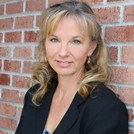
LIsa Black
Cape Coral, FL
Female, 49


I spent the five happiest years of my life in a morgue. As a forensic scientist in the Cleveland coroner’s office I analyzed gunshot residue on hands and clothing, hairs, fibers, paint, glass, DNA, blood and many other forms of trace evidence, as well as crime scenes. Now I'm a certified latent print examiner and CSI for a police department in Florida. I also write a series of forensic suspense novels, turning the day job into fiction. My books have been translated into six languages.
That’s a very broad question. What specifically do you need to know?
Share Answer: 

Wow, that's an extremely broad question. I don't know if the rates of crimes solved have been increased greatly--perhaps in some crimes like rape or murder but perhaps not in other crimes like burglary and theft. But certainly the biggest advances in forensics have been DNA and the connectedness of fingerprint databases. Less specific but perfectly valid analyses like pollen, soil, and other trace evidence examination have gone by the wayside. And digital analyses such as the downloading of cell phones and personal computers are helping solve crimes more and more, but then people didn't have cell phones or personal computers 40 years ago so I'm not sure that counts!
I hope that helps!
Share Answer: 
The basics: our name, address of crime, date, time we arrived, and who else was there (cops, detectives, ME, etc.). Then what we did there, processed for prints, how many photos we took, chemicals used, if we collected evidence. We might also measure the area and make a sketch.
Share Answer: 
Sure! Email me at Lisa-black@live.com.
Share Answer: 
Casting Director
 Are the melt-down auditions on American Idol staged?
Border Patrol Agent
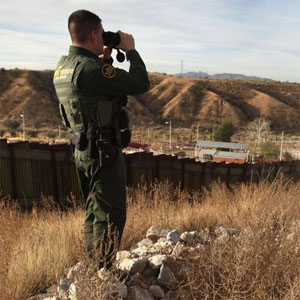 Do you ever feel sorry for the illegals you catch trying to cross the border?
Lifeguard
 Did you ever have to perform CPR or mouth-to-mouth on a swimmer?
I am an expert in some areas of forensic science. I am not an expert in law, public safety policy or our political system.
Share Answer: 
I don't know what you mean by that. Different staff might have different specialties, like bloodstain pattern interpretation or digital forensics, but there's pretty standard things that have to be done at every crime scene, like photography and collection of evidence, processing for fingerprints, etc.
I hope that helps.
Share Answer: 
At my agency the chaplains are all civilians from local denominations.
Share Answer: 
-OR-
 Login with Facebook
 (max 20 characters - letters, numbers, and underscores only. Note that your username is private, and you have the option to choose an alias when asking questions or hosting a Q&A.)
(A valid e-mail address is required. Your e-mail will not be shared with anyone.)
(min 5 characters)
By checking this box, you acknowledge that you have read and agree to Jobstr.com’s Terms and Privacy Policy.
-OR-
Register with Facebook(Don't worry: you'll be able to choose an alias when asking questions or hosting a Q&A.)



 Browse Jobs
 Host a Q&A
 Search

 Submit Your Question
 Host a Q&A
 Last 7

