
LIsa Black
Cape Coral, FL
Female, 49


I spent the five happiest years of my life in a morgue. As a forensic scientist in the Cleveland coroner’s office I analyzed gunshot residue on hands and clothing, hairs, fibers, paint, glass, DNA, blood and many other forms of trace evidence, as well as crime scenes. Now I'm a certified latent print examiner and CSI for a police department in Florida. I also write a series of forensic suspense novels, turning the day job into fiction. My books have been translated into six languages.
If it were allowed to dry and kept dry, then it's possible, though the odds would be incredibly slim since the decomposition fluids from the body would most like overwhelm it. It's worth a try.
Share Answer: 

I'm a civilian employee, not a sworn officer, so no.
Share Answer: 
You just do. Somehow you can either tolerate it or you can't, or you learn to cope with it. There are cops who can work homicide for thirty years and still have a weak stomach. They just don't let it keep them from doing their jobs.
Share Answer: 
Fashion Model
 How much do promo girls at convention booths get paid?
Private Detective
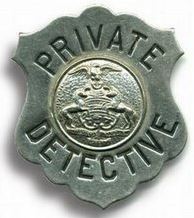 Has anyone ever caught you surveilling them, and what happened?
Professional Gamer
 What's the longest playing gaming session you've ever had?
I don’t see why not. But I wasn’t aware hair could be tested for alcohol, I thought it was only drugs and heavy metals.
Share Answer: 
Yes.
Share Answer: 
Luminal and dye stains just enhance or show you where things are, like blood or fingerprints. DNA analysis and fingerprint analysis are equally effective, so you use what you have. You might have DNA at a crime scene but no fingerprints, or vice versa. We don’t get a choice of what’s left at a crime scene, so we have to make the most of whatever is there. Given that, whatever is the most effective is whatever gives you information relevant to the crime. Say there’s a smear of the victim’s blood on the suspect’s shirt. The suspect tells police he found the body and tried to administer CPR. In that case, the DNA is very much there, but useless to solve the crime. If the suspect says he never met the victim and the same shirt is found in the suspect’s closet , then that’s very relevant to solving the crime.
Share Answer: 
-OR-
 Login with Facebook
 (max 20 characters - letters, numbers, and underscores only. Note that your username is private, and you have the option to choose an alias when asking questions or hosting a Q&A.)
(A valid e-mail address is required. Your e-mail will not be shared with anyone.)
(min 5 characters)
By checking this box, you acknowledge that you have read and agree to Jobstr.com’s Terms and Privacy Policy.
-OR-
Register with Facebook(Don't worry: you'll be able to choose an alias when asking questions or hosting a Q&A.)



 Browse Jobs
 Host a Q&A
 Search

 Submit Your Question
 Host a Q&A

 Last 7

