
LIsa Black
Cape Coral, FL
Female, 49


I spent the five happiest years of my life in a morgue. As a forensic scientist in the Cleveland coroner’s office I analyzed gunshot residue on hands and clothing, hairs, fibers, paint, glass, DNA, blood and many other forms of trace evidence, as well as crime scenes. Now I'm a certified latent print examiner and CSI for a police department in Florida. I also write a series of forensic suspense novels, turning the day job into fiction. My books have been translated into six languages.
I am not sure that it would be possible to detect freon, particuarly the type of freon, as I have no idea what instrumentation would be used or its limits of detection or what effect contact with live or dead would have on the compounds, whether it would tend to react with them or not. I do think it's highly unlikely they would look for that as they would most likely, after the prints had been developed and photographed for the ridge detail, swab up the prints and test them for DNA from the person who left the prints. That process would be designed to detect DNA and nothing else. I suspect these results would come from a magical movie 'Batcomputer' that can tell you every single thing about anything on the planet you drop into it.
Share Answer: 

Usually we can assume what kind of cells will be on it depending on where it was collected from—if from a pop can, it will probably have saliva and skin cells. From underwear might have semen. If from a dark stain, probably blood. How long it takes depends on the type of analyses done and the type of DNA testing—STR, ySTR, mitochondrial, etc. It will take at least a day or two, and after that it depends on the lab’s backlog. We send our DNA to a state lab and it will take between a month and four months to get the results back. If detectives or prosecutors want it faster and someone’s budget is willing to pay for it, we can send it to a private, accredited lab and pay for a faster analysis. They can do it in as quickly as three days or up to a week or two depending on what you want to pay for. If you want it in a week it will cost a few thousand dollars—something like $600 a sample plus upcharges for expedited service and an overall charge, if I’m remembering correctly. If you want more like three days it will be more like $5000. That’s for the basic three samples—victim, suspect and questioned sample.
Share Answer: 
The rape kit will only show biological evidence of another person besides the victim. Bruising, injuries and testimony will be used to determine whether it was consensual or not.
Share Answer: 
That’s a good question, because there is no hard and fast rule—your title is whatever your boss says it is. A CSI may work only at crime scenes or may also do any office or lab analysis as well, it depends on how big the unit is and how work is distributed.
Share Answer: 
Beauty Queen
 Have you ever suspected that the judging in a pageant was rigged?
"The Onion" Contributors
 What's your favorite Onion headline of all time?
Oral and Maxillofacial Surgeon
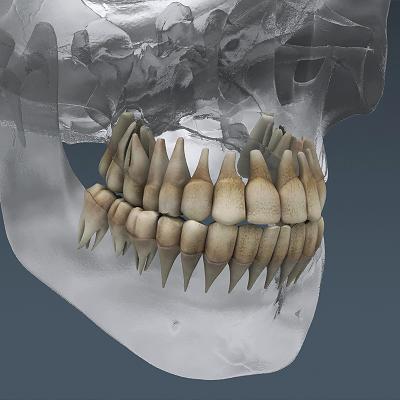 How often do people wake up during surgery?
Sure, email me at lisa-black@live.com
Share Answer: 
I couldn’t. I don’t know if a pathologist or biologist could.
Share Answer: 
Sorry, I'm having a hard time picturing how what you're describing would be possible.
Share Answer: 
-OR-
 Login with Facebook
 (max 20 characters - letters, numbers, and underscores only. Note that your username is private, and you have the option to choose an alias when asking questions or hosting a Q&A.)
(A valid e-mail address is required. Your e-mail will not be shared with anyone.)
(min 5 characters)
By checking this box, you acknowledge that you have read and agree to Jobstr.com’s Terms and Privacy Policy.
-OR-
Register with Facebook(Don't worry: you'll be able to choose an alias when asking questions or hosting a Q&A.)



 Browse Jobs
 Host a Q&A
 Search

 Submit Your Question
 Host a Q&A
 Last 7

