
LIsa Black
Cape Coral, FL
Female, 49


I spent the five happiest years of my life in a morgue. As a forensic scientist in the Cleveland coroner’s office I analyzed gunshot residue on hands and clothing, hairs, fibers, paint, glass, DNA, blood and many other forms of trace evidence, as well as crime scenes. Now I'm a certified latent print examiner and CSI for a police department in Florida. I also write a series of forensic suspense novels, turning the day job into fiction. My books have been translated into six languages.
Again that depends entirely upon the circumstances. If someone is shot from a distance, then the clothes aren't going to tell you anything. If someone gets close enough to leave their own blood or their hair on the clothing, then they might.
Share Answer: 

Sorry, but as I'm not a DNA analyst, I wouldn't have any idea.
Share Answer: 
The requirements are whatever your employer says they are (same with your job title). DNA analysts are often required to have a PhD in genetics. At the coroner's I had to have a BS in one of the natural sciences. At my police department they only require a high school diploma, but give extra points for advanced schooling so we all have BSs.
Share Answer: 
Probably not. Fingerprints are left usually because skin has oils and sweat, which of course gloves wouldn't have.
Share Answer: 
Aircraft Mechanic
 Did you ever catch something critical right before a plane was about to take off?
iPhone & iPad Technician
 Is Apple is still the young and hip brand or have mom and dad spoiled it?
Firefighter
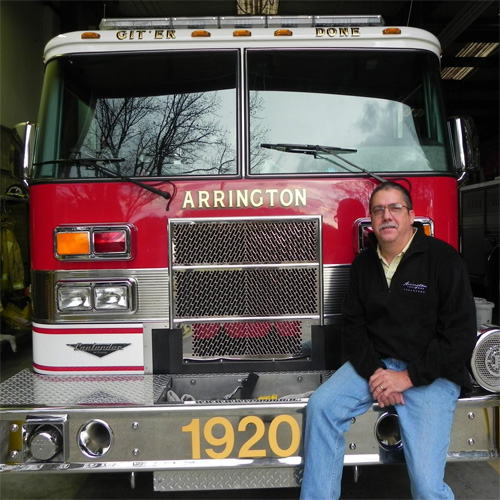 How can you tell if a fire was arson?
Over the years I've operated a Fourier Transform Infrared Spectrometer, an Atomic Absorption Spectrophotometer, alternate light sources, a photography setup, and various software programs. Venders or other employees train me to use them.
Share Answer: 
see question above.
Share Answer: 
It’s not easy to get a job in this field—there’s a lot of competition and staffs are not as large as you might think. The best thing you can do, after graduation if not before, is get an internship somewhere to get some practical experience and meet people. It will also help if you’re willing to relocate.
Share Answer: 
-OR-
 Login with Facebook
 (max 20 characters - letters, numbers, and underscores only. Note that your username is private, and you have the option to choose an alias when asking questions or hosting a Q&A.)
(A valid e-mail address is required. Your e-mail will not be shared with anyone.)
(min 5 characters)
By checking this box, you acknowledge that you have read and agree to Jobstr.com’s Terms and Privacy Policy.
-OR-
Register with Facebook(Don't worry: you'll be able to choose an alias when asking questions or hosting a Q&A.)



 Browse Jobs
 Host a Q&A
 Search

 Submit Your Question
 Host a Q&A
 Last 7

