
LIsa Black
Cape Coral, FL
Female, 49


I spent the five happiest years of my life in a morgue. As a forensic scientist in the Cleveland coroner’s office I analyzed gunshot residue on hands and clothing, hairs, fibers, paint, glass, DNA, blood and many other forms of trace evidence, as well as crime scenes. Now I'm a certified latent print examiner and CSI for a police department in Florida. I also write a series of forensic suspense novels, turning the day job into fiction. My books have been translated into six languages.
I would try an alternate light source, UV or IR light or even white light with colored filters. That might make it more visible. Other than that, I don't know, sorry. You'd have to ask a document examiner, they might have more techniques for working with paper.
Share Answer: 

No. You might be able to estimate muzzle to target distance from a spray pattern, but not firearm type or brand.
Share Answer: 
How to best process or obtain a piece of evidence.
Share Answer: 
It will turn a dark red brown once it's completely dry, and will stay that color so far as I know if conditions stay consistent. If it changes further it would probably just fade a bit.
Share Answer: 
Zookeeper and Animal Trainer
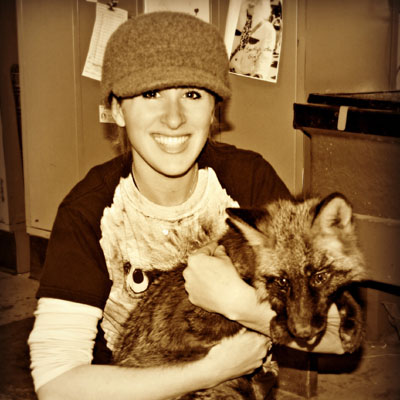 Which cuddly-seeming animals are actually dangerous to be around?
Fashion Model
 Do you feel objectified when you're standing around in skimpy outfits?
Former IRS Revenue Officer
 Are IRS auditors more accommodating when you're polite with them?
I'm not a DNA expert, but I know that half the 23 chromosomes in a person''s nuclear DNA come from one parent and half from the other parent, so part of the father's DNA would have to be present in the child.
Mitochondrial DNA (which is a different substance entirely, a circular structure present in the cell's mitochondria, whereas nuclear DNA is a double helix present in the cell nucleus) is passed from mother to child without recombining, so only the mother's mitochondrial DNA is present in the child. We test for mitochondrial DNA when nuclear DNA isn't available, like when we only have cut hair or fingernails or old bone to work with.
Share Answer: 
I've been involved with a number of child murders but in every case the child was killed by someone in their own family, usually a parent. In one case a 6 year old was shot by an acquaintance of his older brother's, but the 6 year old wasn't the target, simply an inconvenient witness. I've never worked one where the child was abducted. I don't have chilidren so it's actually easier for me than for people who do. To me it's largely the same as any other murder, though harder in some ways because the victim looks so vulnerable. You handle it because there's so much to be done and you have to do it right, so thinking about all that keeps you from thinking about the tragedy of this young life.
Share Answer: 
A forensic lab wouldn't examine a hyoid bone. That would be done at the autopsy by the pathologist. To the best of my knowledge there isn't anything else to examine, just whether it's broken or not, and as I said it doesn't conclusively prove anything one way or the other.Best of luck.
Share Answer: 
-OR-
 Login with Facebook
 (max 20 characters - letters, numbers, and underscores only. Note that your username is private, and you have the option to choose an alias when asking questions or hosting a Q&A.)
(A valid e-mail address is required. Your e-mail will not be shared with anyone.)
(min 5 characters)
By checking this box, you acknowledge that you have read and agree to Jobstr.com’s Terms and Privacy Policy.
-OR-
Register with Facebook(Don't worry: you'll be able to choose an alias when asking questions or hosting a Q&A.)



 Browse Jobs
 Host a Q&A
 Search

 Submit Your Question
 Host a Q&A
 Last 7

