
LIsa Black
Cape Coral, FL
Female, 49


I spent the five happiest years of my life in a morgue. As a forensic scientist in the Cleveland coroner’s office I analyzed gunshot residue on hands and clothing, hairs, fibers, paint, glass, DNA, blood and many other forms of trace evidence, as well as crime scenes. Now I'm a certified latent print examiner and CSI for a police department in Florida. I also write a series of forensic suspense novels, turning the day job into fiction. My books have been translated into six languages.
On the victim’s body? Most likely not because after that much time the victim would most likely be skeletal remains only, if buried and certainly if on the surface. If the body was in some kind of container, sealed, it might be completely decomposed, mummified or preserved, depending on circumstances. If the killer’s blood or semen got on some object that was with the body, it could conceivably survive if protected, but it would be very unlikely to yield a usable DNA profile.
Hope that helps!!
Share Answer: 

I don't follow sports so I haven't seen the story.
Share Answer: 
My job isn't like TV--I'm not involved in every single aspect of the investigation. My job is to provide forensic support to the detectives, so in any given case I estimate I know perhaps 20% of the overall information relating to the crime. I don't know what witnesses, victims, suspects have said, what financial or phone records might show, etc. etc. The detectives would probably tell me if I asked, but I'm usually too busy with all the other cases to ask.
Who to arrest and who to prosecute is up to the detectives and the prosecutors. They don't ask my opinion, and in light of the first paragraph, I probably couldn't give them an informed one.
Share Answer: 
I thought phlebotomy was the drawing of blood, so I assume its mostly used in medicine. But one person in my office is actually trained in it so she can draw our blood when we need samples for positive controls.
Share Answer: 
Navy Officer (Former)
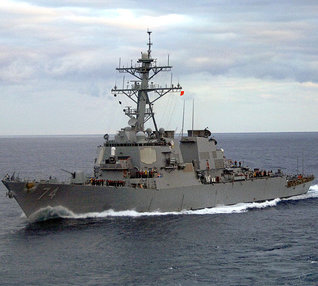 Why do so many people miss the military after they get out?
Chef
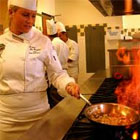 Has anyone ever found anything gross in their food on your watch?
Dry Cleaner
 What happens to clothing at dry cleaners that goes unclaimed?
My guess is it depends on what you want to do. If you want to work in a lab, then biology for DNA or trace evidence or chemistry for toxicology would be the way to go. If you want to work in the field, mostly at the crime scene, then you might want the more general forensic science. Go on the websites of agencies and professional organizations, look at their vacancy postings, and see what they ask for. Best of luck!
Share Answer: 
That depends entirely on where you work and what your job is. If you’re a ballistics expert, you’ll spend your days looking at guns and ammunition. If you’re a DNA analyst, you’ll be in a lab with micro tubes. If you’re me, you spend a lot of time looking at fingerprints and sometimes go to crime or death scenes.
Share Answer: 
I’m sorry for your loss. What was the cause of death?
Share Answer: 
-OR-
 Login with Facebook
 (max 20 characters - letters, numbers, and underscores only. Note that your username is private, and you have the option to choose an alias when asking questions or hosting a Q&A.)
(A valid e-mail address is required. Your e-mail will not be shared with anyone.)
(min 5 characters)
By checking this box, you acknowledge that you have read and agree to Jobstr.com’s Terms and Privacy Policy.
-OR-
Register with Facebook(Don't worry: you'll be able to choose an alias when asking questions or hosting a Q&A.)



 Browse Jobs
 Host a Q&A
 Search

 Submit Your Question
 Host a Q&A
 Last 7

